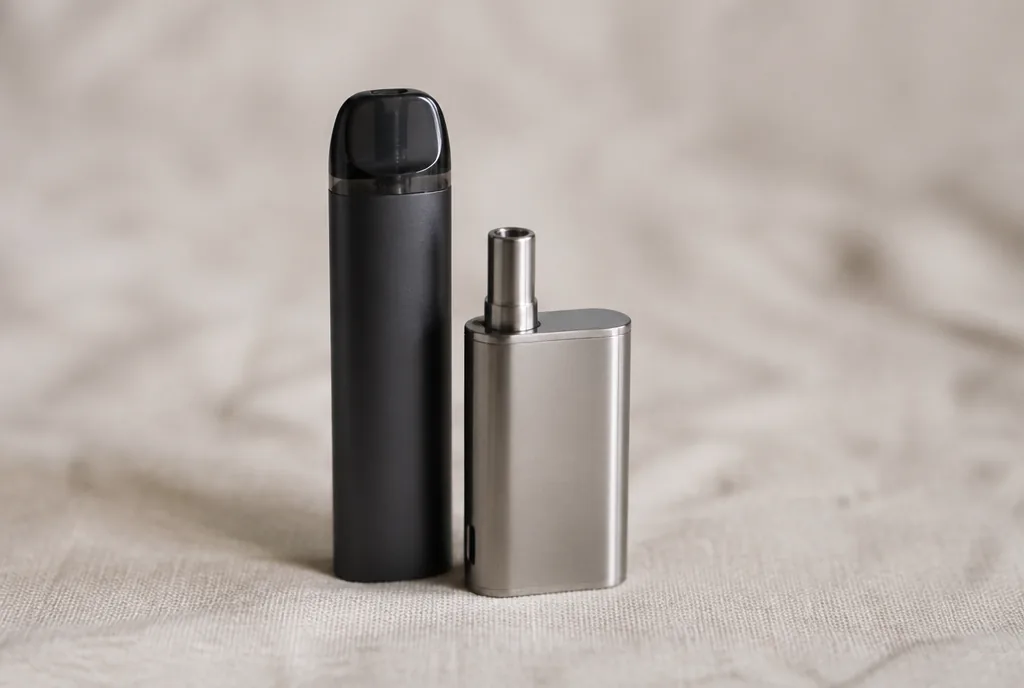
21700 battery: reading capacity and runtime
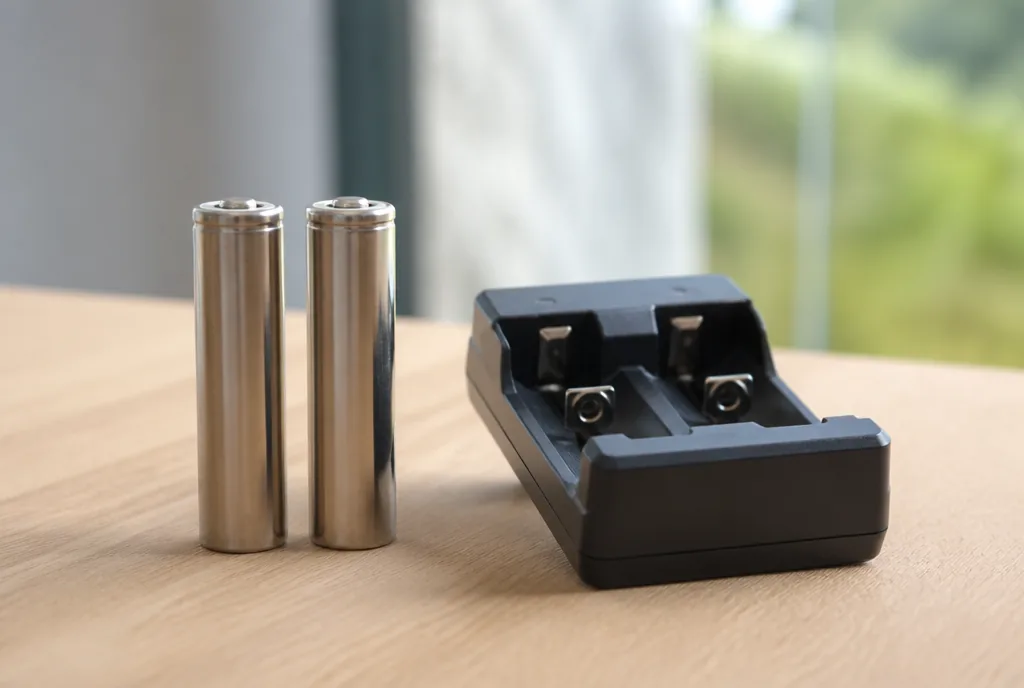
A British listing for a 21700 battery lines up three numbers: a capacity in milliamp hours, a current in amps, and a voltage. Retailers print them side by side as though they were read the same way. They measure completely different things, and only one of them tells you anything about how long the cell will last. Here is how they connect, and what honest arithmetic can genuinely be drawn from them.
The three numbers on a 21700 battery and what they measure
Capacity in milliamp hours describes a quantity of stored charge, not a duration. It answers the question of how much, never the question of how long, and every runtime figure you see quoted online has been derived from it rather than read off the cell.
The continuous discharge rating, given in amps, describes a rate. It is the figure the cell manufacturer publishes to say how fast that stored charge is allowed to leave the cell, and it is a limit rather than a performance score.
Nominal voltage, almost always 3.7 V on this format, is the bridge between the two. Without it, milliamp hours and amps cannot be reconciled, and no comparison between a removable cell and a built in battery is possible at all.
The name itself is simply a measurement: 21 mm across, 70 mm long. UK stockists such as Fogstar and Ecigone list these cells alongside 18650 and 26650 sizes precisely because the numbering is dimensional. Nothing in those five digits says anything about how good the cell is.
Converting mAh into watt hours, the only comparable unit
Comparing two cells by milliamp hours alone works only when they share the same voltage. The moment you want to hold a removable cell up against a pod with a sealed battery, you have to move to energy, which is expressed in watt hours.
The conversion is one multiplication: capacity in amp hours multiplied by nominal voltage. A 5000 mAh cell at 3.7 V therefore stores 5 x 3.7, or 18.5 Wh. A 4000 mAh cell at the same voltage falls to 14.8 Wh.
The watt hour has one decisive advantage. It compares directly with vaping power, which is also expressed in watts, and that shared unit is what makes any runtime estimate possible in the first place.
Estimating the runtime of a 21700 battery
No product page in Britain publishes a runtime in hours, and there is a good reason for that. Runtime depends entirely on how the device is set and how it is used, so any figure would be a guess dressed up as a specification.
An estimate is still possible, provided every assumption is shown rather than hidden. What follows is arithmetic, not a measurement, and it is meant to place an order of magnitude rather than to promise a day of use.
What a puff costs in energy
A puff draws a given power for a given time. At 60 W for two seconds, it uses 120 joules, which works out at 0.033 Wh once converted to the hourly unit. At 30 W over the same two seconds, it uses roughly 0.017 Wh.
That single figure is the building block of every estimate that follows. It depends on neither the brand of the cell nor its format, only on the wattage showing on the screen and the length of the draw.
This is also why two people using identical hardware report wildly different battery life. They are not disagreeing about the cell, they are running different numbers into the same equation.
How many puffs the arithmetic gives
Start from the 18.5 Wh of a 5000 mAh cell and hold two assumptions in the open: a conversion efficiency of around 90 percent, and a discharge carried down to the point where the device cuts off. That leaves roughly 16.65 Wh usable, or somewhere near 500 two second puffs at 60 W.
The same cell run at 30 W would roughly double that count. This is a projection, not a reading, and its value lies in comparing two settings rather than in predicting a day.
Three things pull the real figure down. Voltage sags under load, which reduces the energy actually extractable. The board draws a little power at rest. And most devices cut off well above the minimum voltage the cell datasheet allows.
The discharge line, and how to read it rather than guess it
The continuous discharge rating does not extend runtime. It describes what the cell is specified to deliver, and it belongs in a completely different mental column from capacity.
The method for reading it is short and worth learning once. Take the wattage you actually use, divide it by the nominal voltage of the pack, and you have an approximate current draw in amps before conversion losses are even counted. Then open the manufacturer datasheet for the exact cell you own, find the continuous discharge line, and compare the two figures yourself.
The point of that exercise is that the answer belongs to your cell, not to a general rule and not to a number quoted in a forum thread. Two cells with identical capacity, sold in the same shop on the same day, can publish very different discharge lines because the internal chemistry differs.
The same method explains why series arrangements exist. On a device running two cells in series the pack voltage doubles, so the same wattage divides into a smaller current draw per cell, which is why the highest powered hardware rarely runs on a single cell. That architecture is covered in our piece on the 21700 mod and its layouts.
Capacity or current: reading the trade off on a listing
No cell maximises both. The 21700 market makes the trade off almost comically visible, and it can be read straight off a British product page without any special knowledge.
Cells sold at the top of the capacity range publish a lower discharge line. Cells built for high drain, the Molicel and Vapcell names that UK vape shops stock most heavily, publish a higher one and give up capacity in exchange. Neither is better in the abstract.
The useful reference point is the intended use. Moderate power vaping rewards milliamp hours, because runtime is the binding constraint. Sub ohm vaping shifts the binding constraint to current, and the datasheet becomes the document that matters rather than the marketing line.
Cycle life, the third number worth tracking
Published capacity applies to a new cell. It falls as the cell is charged and discharged, and cycle life is the only published figure that acknowledges this at all.
British listings commonly quote a few hundred cycles for vaping cells. Set against one charge a day, several hundred cycles places useful service life somewhere under a year, which is a calculation anyone can run for their own habits in about ten seconds.
That number is what turns a purchase into a running cost. A cell costing more but holding twice the cycles works out level at equal capacity. How you recharge feeds directly into that counter, which our guide to choosing a vape battery charger sets out in detail.
Safety habits that apply to every 21700 battery
Four habits cover almost everything, and none of them require a number. Cells used in pairs should be matched: same brand, same model, same age, charged together and used together, never mixed from different drawers.
The plastic wrap is a working part, not decoration. If it splits, tears or lifts at the shoulder, the cell should be re wrapped or retired rather than pushed back into a device, because the exposed metal underneath is no longer insulated.
Loose cells travel in a rigid case, never in a pocket or a bag with keys and coins, which can bridge the terminals. And charging happens on a charger designed for the chemistry and size in question, following the cell manufacturer instructions rather than a rule of thumb.
Frequently asked questions
Does a 21700 cell deliver more power than an 18650?
Not necessarily. The larger volume usually allows more capacity, but the discharge line depends on internal chemistry rather than on physical size. Some 18650 cells publish a higher figure than some 21700 cells.
Why is measured capacity lower than the published capacity?
The manufacturer figure corresponds to a slow discharge under laboratory conditions. In real use, a higher draw and an early cut off both reduce the charge actually returned to the device.
Do two cells of the same model have the same runtime?
At purchase, near enough. After several months the gap widens according to how each has been used, which is exactly the divergence that matched pairs are meant to avoid.
Can the capacities of two cells be added together?
Only in parallel. In series it is voltage that adds, and the milliamp hour figure stays that of a single cell, even though total energy in watt hours does double.
Where do I find the datasheet for my own cell?
Reputable UK stockists link it on the product page, and cell manufacturers publish them directly. If neither exists for a given cell, that absence is itself information worth acting on.
Reading a 21700 battery: the three numbers to keep
A 21700 battery comes down to a capacity, a discharge line and a cycle count. The first converts into watt hours so runtime can be estimated, the second is read off the datasheet and compared against your own current draw, the third turns a purchase price into a monthly cost.
None of the three stands alone, and none of them replaces watching your own use over a few weeks. What the arithmetic does give you is a way to compare two listings honestly, and to spot the moment a shop is quoting a marketing figure rather than a specification.
Editorial content for adult readers only. Vaping products generally contain nicotine, a substance that causes addiction. Not for sale to anyone under 18 in the United Kingdom. This article is not a buying recommendation.
Further reading
Data
Coolfire Z80: 80 watts from a single 18650
Coolfire Z80: 80 W advertised, one 18650 cell, USB C charging. What arithmetic says about the power actually sustainable and about runtime.

The market
21700 mod: why the format took over box mods
Why UK makers moved from 18650 to 21700, what the larger cell changes in runtime and bulk, and how single and dual battery mods split the market.
Trends
Oxva VPrime: what 2600 mAh actually covers
Oxva VPrime: 2600 mAh, 60 W, USB C charging. The calculation that links those figures to a runtime, and what the pod chosen changes in the result.