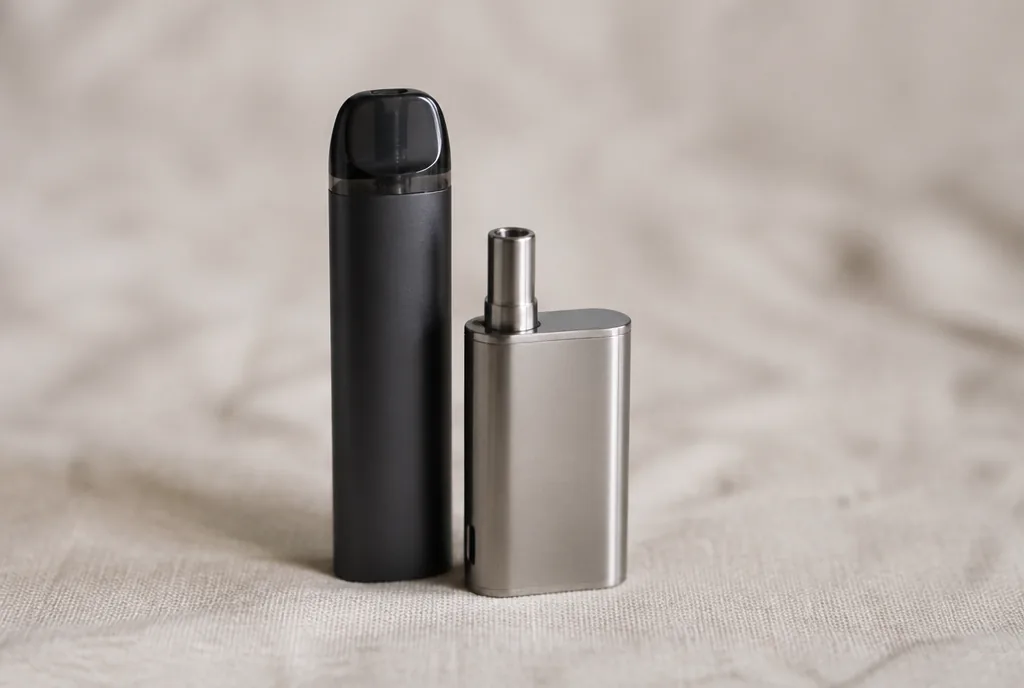
Coolfire Z80: 80 watts from a single 18650
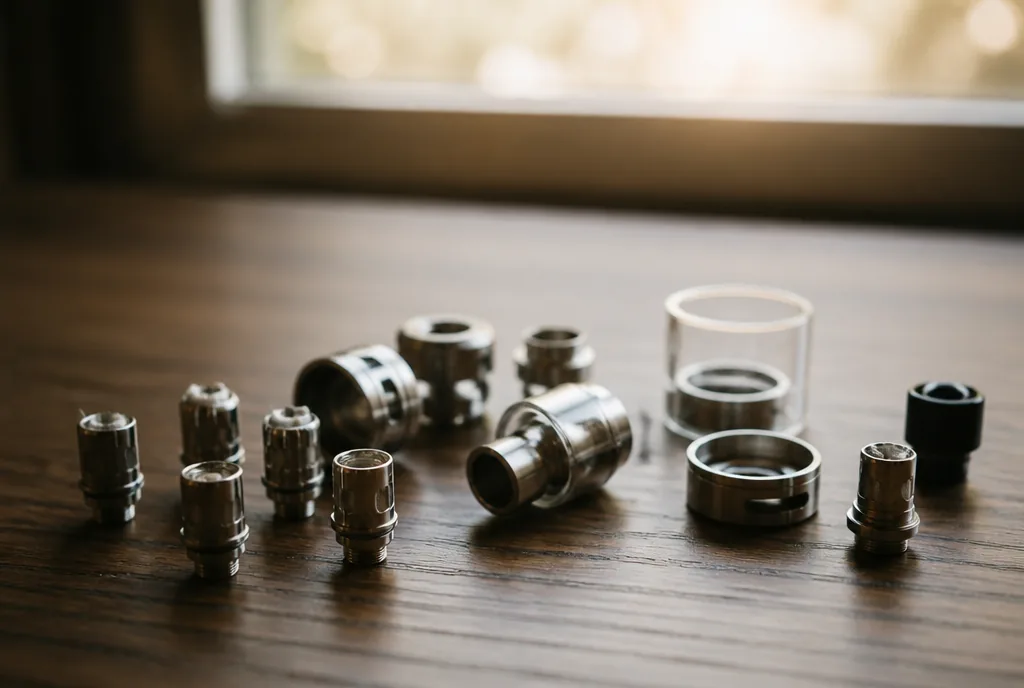
A compact device, one battery bay, and 80 watts printed on the listing. The gap between that headline figure and what a single cell can actually sustain is the most interesting thing about this model. It is not a question of opinion, it is a question of arithmetic, and every value needed sits on British retailer pages already.
What the Coolfire Z80 numbers actually say
The Coolfire Z80 runs on one 18650 cell, sold separately, across an output range that UK listings state as 6 to 80 W. It accepts a broad spread of coil resistances, charges over USB C, and reaches British shelves in two families of kit: the older Zenith II version and the more recent Nex version.
The 80 W figure is not false. The board can deliver it, and Innokin has no reason to overstate the capability of its own chipset. The interesting question is what a single cell supplies behind it, and for how long.
British reviewers point in a consistent direction. Ecigclick and Mist both describe the Nex as a device whose appeal is a removable cell and stable output at low battery, not a device bought for its ceiling. Vapinghardware made the same observation on the Zenith II kit years earlier.
Current draw: the first arithmetic constraint
The constraint resolves in one division. Power demanded, divided by the nominal voltage of the cell, gives the approximate current drawn at the cell itself, before any conversion losses are counted.
On a single cell device the nominal voltage is 3.7 V, so any wattage you set converts straight into an amp figure with a pocket calculator. That number is yours to work out, and it changes every time you change the setting on the screen.
The second half of the method matters more than the first. Open the datasheet published by the maker of the exact cell you own, find the continuous discharge line, and compare it against the draw you just calculated. That comparison belongs to your cell, not to a general rule, and no shop listing can perform it for you.
This is also why the capacity against current trade off described in our guide to reading a 21700 battery applies just as squarely to the 18650 format. Two cells of identical capacity can publish very different discharge lines, and the difference only shows up in the document nobody reads.
Estimating runtime on the Coolfire Z80
No listing states a duration of use, since the cell is not supplied. A projection stays possible provided each assumption is shown rather than passed off as a measurement.
Take a 3000 mAh cell, a common choice in British listings for this size. Stored energy works out as 3 Ah multiplied by 3.7 V, which gives 11.1 Wh. Apply a conversion efficiency near 90 percent and a discharge carried down to the board cut off, and usable energy lands around 10 Wh.
From there the puff count is a division. At 35 W over two seconds a puff uses about 0.019 Wh, which places the result near 515 puffs. At 80 W over the same two seconds it uses about 0.044 Wh, and the total falls towards 225.
The ratio is more than two to one, and that is the most useful number in this article. It depends on no measurement at all: only on the wattage showing on the screen and the length of the draw. Anyone can rerun it for their own habits in under a minute.
What the supplied coils actually ask for
The kit versions ship with coils whose listed operating bands sit well below the ceiling. On the Zenith II kit those are a higher resistance coil for restricted draws and a lower resistance one for a looser draw, and neither is listed anywhere near 80 W.
Ecigclick reached the same conclusion on the Nex version: the coils in the box do not call for anything approaching the maximum. The top of the range therefore only becomes meaningful with an atomiser bought separately, which is a purchase decision rather than a specification.
That gap between a board capability and a shipped configuration is extremely common, and it is worth naming. A maximum power describes what the electronics can do, never a regime the kit invites you towards.
Charging over USB C, and what the listings disagree about
The port charges the cell in place, and this is where British sources diverge. Some listings quote a lower charging current for the Zenith II generation while reviewers of the Nex describe faster charging on the newer board.
The arithmetic is the same in either case. Divide the cell capacity in milliamp hours by the charge current in milliamps, and you have a theoretical floor in hours, to which the closing constant voltage phase adds a tail.
Retailers stocking this device tend to add a sensible reservation of their own: in device charging is best treated as an occasional convenience, with an external unit preferred for daily use. The full reasoning on charge regimes sits in our piece on choosing a vape battery charger.
Cell handling on a single bay device
A single bay device removes the matched pair problem but not the rest. The cell travels in a rigid case when it leaves the device, never loose in a pocket or bag where keys and coins can bridge the terminals.
The wrap around the cell is an insulator doing a job, not a decorative sleeve. If it splits, tears or lifts at the shoulder, the cell gets re wrapped or retired before it goes back into the bay, because the metal underneath is live along its whole length.
Charging belongs on a unit designed for the size and chemistry in question, following the cell manufacturer instructions. And a cell that arrives without a traceable datasheet from a named maker is a cell you cannot run the discharge check on at all, which is reason enough to buy from a UK stockist that publishes one.
British specifics worth knowing before comparing figures
This device exists in several versions and several kit bundles, which explains why two tables of specifications rarely match. Height, depth and weight all vary by a few millimetres and a few grams between the Zenith II and Nex generations, and between mod only and full kit listings.
There is one British constraint that is not a divergence at all. Refillable tanks sold in the United Kingdom are capped at 2 ml, and nicotine containing e liquid at 20 mg/ml in 10 ml bottles, so any tank capacity quoted on an overseas listing for the same kit does not describe what arrives at a UK address.
That cap has a real effect on how this device reads here. A 2 ml tank on a compact single cell chassis makes the moderate end of the output range the natural home for the Coolfire Z80 in Britain, and the ceiling becomes a specification rather than a destination.
Frequently asked questions
Does the FØ mode change consumption?
Innokin describes it as an alternating current arrangement heating the coil from both ends. No comparative consumption data is published by the brand, which makes any figure on its effect a guess.
What does the refresh function actually do?
It feeds the coil at a fraction of its output to re wet the wick. It therefore uses energy without producing usable vapour, which is worth knowing if you use it often.
Can a wider atomiser be fitted on top?
The listings publish a maximum accepted diameter, beyond which the overhang is mechanical before it is cosmetic on a 510 connection. Check the figure against the atomiser rather than the photograph.
Is a very high resistance coil useful on this device?
It corresponds to the upper limit of stated compatibility. At that value the useful power is very low, which stretches the number of puffs available from the same cell considerably.
Why do retailers publish different weights?
Because they are not weighing the same object: mod only, mod with tank, or complete kit. Checking the perimeter before comparing two figures remains the rule.
What the Coolfire Z80 teaches about reading a power figure
The case of the Coolfire Z80 sums up a rule that reaches well beyond this model. A maximum power describes a capability of the electronics, never a regime of use.
Divided by the cell voltage it gives an amp figure you then check against your own datasheet. Multiplied by the length of a puff it gives an energy cost you can convert into a puff count. Those two operations say more, and say it more honestly, than any amount of copy on a product page.
Editorial content for adult readers only. Vaping products generally contain nicotine, a substance that causes addiction. Not for sale to anyone under 18 in the United Kingdom. This article is not a buying recommendation.
Further reading
Data
21700 battery: reading capacity and runtime
How to read a 21700 battery listing: turning mAh into watt hours, estimating runtime by arithmetic, and reading the discharge line properly.
The market
21700 mod: why the format took over box mods
Why UK makers moved from 18650 to 21700, what the larger cell changes in runtime and bulk, and how single and dual battery mods split the market.
Trends
Oxva VPrime: what 2600 mAh actually covers
Oxva VPrime: 2600 mAh, 60 W, USB C charging. The calculation that links those figures to a runtime, and what the pod chosen changes in the result.